Spine surgery has seen remarkable advancements over the years, and one of the most significant breakthroughs is the use of pedicle screws. These tiny but powerful implants have transformed the way spinal conditions are treated, bringing hope, stability, and improved outcomes to patients worldwide. Whether it’s a traumatic injury, degenerative disc disease, scoliosis, or spinal stenosis, pedicle screws play a vital role in restoring spine alignment and ensuring long-term success after surgery.
But what exactly makes them so effective? Let’s break it down in a simple, human-centered way.
What Are Pedicle Screws?
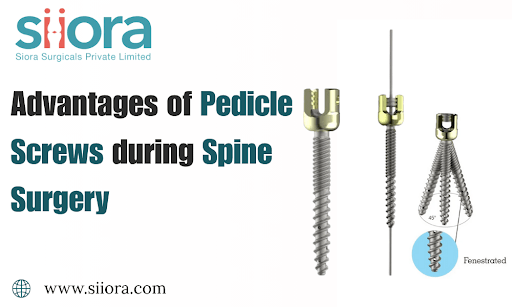
Before diving into their advantages, it’s helpful to understand what pedicle screws are. These are metal screws, usually made of titanium, inserted into the pedicles, small bony bridges in each vertebra. Once secured, they connect to rods that stabilize the spine, keeping the vertebrae in place as the bones fuse together post-surgery.
What Are the Advantages of Pedicle Screws?
Superior Stability and Fixation
One of the biggest benefits of pedicle screws is the rock-solid stability they offer. Because they’re anchored directly into the vertebral pedicles, they create a strong, three-dimensional grip. This allows the surgeon to hold the spine in an optimal position during healing.
Whether it’s a spinal fusion, fracture repair, or deformity correction, this level of stability reduces micromovement and helps the bones heal in proper alignment, something that’s critical for long-term success.
Versatility in Complex Cases
Pedicle screws are impressively versatile. They can be used at almost any level of the spine, from the cervical to the sacral regions, and in a wide range of conditions. In fact, they’re especially valuable in complex or multi-level surgeries where other fixation methods might not provide enough support.
For patients with spinal deformities like scoliosis or kyphosis, these screws allow surgeons to correct the curvature more precisely, giving better structural outcomes and improved quality of life.
Improved Surgical Outcomes
Multiple clinical studies have shown that surgeries using pedicle screw systems tend to have higher fusion rates and better patient outcomes. That means people often experience quicker pain relief, faster recovery, and reduced chances of needing a second surgery.
Because they enable such precise positioning, pedicle screws also lower the risk of long-term complications like non-union (failure of bones to fuse) or hardware failure.
Minimized Risk with Image Guidance
In the past, inserting these screws had a learning curve, and misplacement could cause nerve or vascular injury. However, modern spine surgery now often involves intraoperative imaging and navigation systems, like fluoroscopy or computer-guided tools. These allow for real-time visualization, making screw placement much safer and more accurate.
This tech-assisted precision not only enhances patient safety but also makes minimally invasive spine surgeries possible, with smaller incisions, less blood loss, and shorter hospital stays.
Durability for Long-Term Support
Once inserted, pedicle screws are built to last. They’re made from high-grade materials that resist corrosion and fatigue. For patients, that translates into long-term durability, especially important for younger individuals or those with active lifestyles who require their spine hardware to hold up over decades.
Customization for Individual Needs
Modern screw systems come in a variety of shapes, sizes, and materials, allowing surgeons to customize the fixation for each patient. Whether it’s adjusting the angle of the screw or choosing low-profile designs to reduce postoperative discomfort, there’s no one-size-fits-all approach, just highly individualized care.
Final Thoughts
Pedicle screws have truly revolutionized the field of spine surgery. They provide unmatched stability, versatility, and precision, allowing patients not only to recover from debilitating spinal conditions but also to return to their daily lives with confidence.
As orthopaedic implants continue to evolve, one thing remains clear, pedicle screws have earned their place as a cornerstone in modern spine care. Whether you’re a patient considering surgery or just curious about how far orthopedic technology has come, understanding its advantages can help demystify the process and highlight just how far medicine has progressed in restoring movement and relieving pain.
 siiora surgicals pvt. ltd